

Pappy Van Winkle is the bourbon that everybody, whether you enjoy bourbon or not, knows about. The history, mystery, scarcity and scandal are just a few of the reasons Van Winkles are so sought after. In 1996 the Pappy Van Winkle Family Reserve 20 year bourbon received a near perfect score of 99 at the Beverage Testing Institute, the highest score ever given, and started the desire for Pappy. As Pappy became more popular and harder to procure, a secondary market began to form where people would resell bottles to make a profit. In 2013 there was an infamous Pappy heist from Buffalo Trace Distillery were employees stole bottles to resell for personal profit. The desire to obtain bottles of Pappy Van Winkle Bourbon has been a frenzy ever since and gains more popularity by the day. The pinnacle of a bourbon experience is tasting a Van Winkle Family Reserve.
Wright Thompson, author of this book and senior writer at ESPN, tells the story of the current curator and grandson of Pappy, Julian Van Winkle III. Today Julian is the face of the most popular bourbon in the world but it wasn’t always easy for him or his family. Thompson also injects a personal story of his journey dealing with his family’s past, present and future.
Many times Thompson speaks of the fact that bourbon, much like families, represent time. Pappy Van Winkle bourbon is 15, 20 and 23 years old. Drinking a bourbon that old makes you think, what was I doing when this was distilled, placed into a barrel and began aging? How have you changed and what have you experienced while this bourbon was aging in a new oak barrel? You also have to enjoy drinking a product that old, with so much work and thought placed into it. Hopefully you are enjoying your bourbon with good company making good memories.
Bourbon also represents the future. The planning that goes into predicting how much to make and what the bourbon market might look like decades into the future is tough to predict. Many distillers place their distillate into barrels knowing they will not be around long enough to see it bottled. Much like an older family member thinking about grandchildren or great grandchildren, what they might be like when they grow up.
Another reason the Van Winkle line of bourbon is so popular is because they use wheat in their grain recipe instead of rye. This leads to a sweeter, softer tasting bourbon with a thicker mouthfeel, compared to a more traditional rye forward bourbon that might be spicier and have more herbal notes. Pappy Van Winkle was the first to produce this type of bourbon on a large scale and made this type of recipe popular in the early 1900’s. Pappy was a giant in the bourbon industry and his brands and distillery rose to fame.
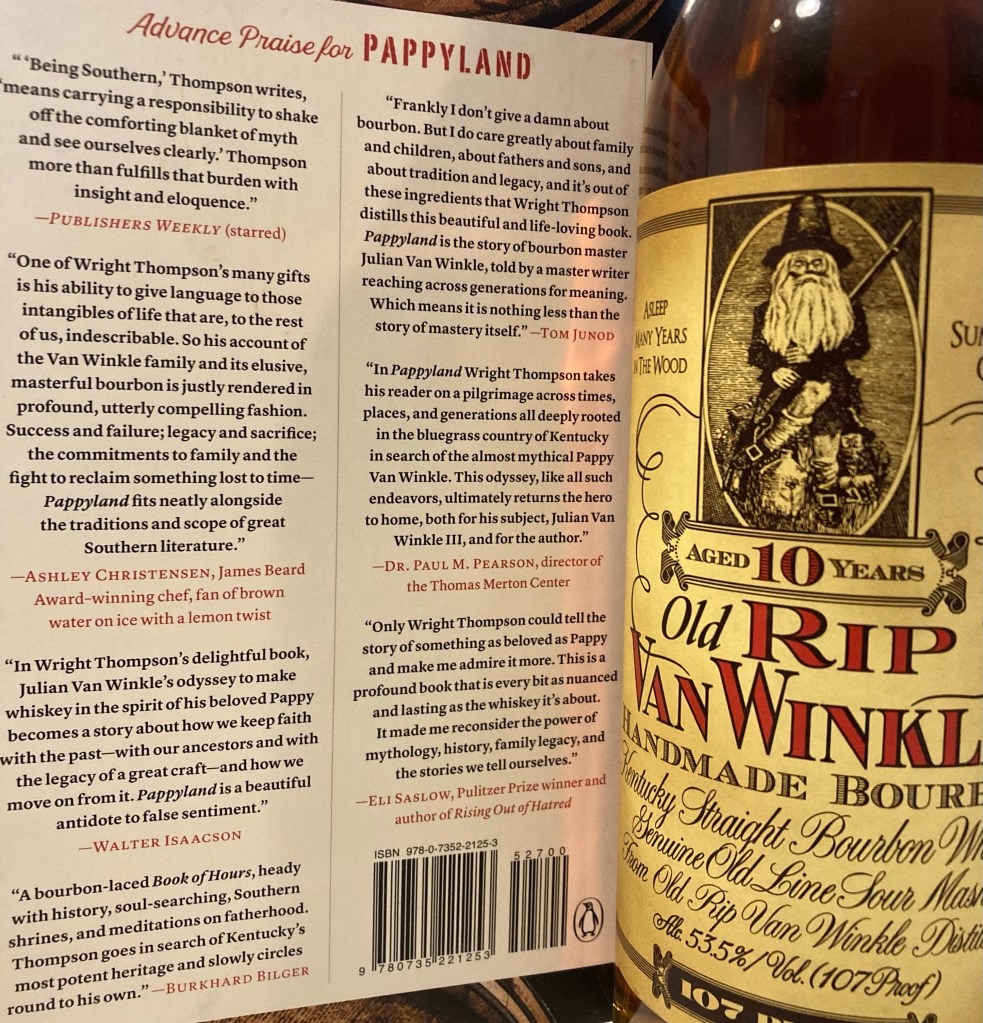
After Pappy passed away in 1965 at the age of 91, his son Julian Jr took over. Culturally times were changing and bourbon was falling out of favor with the general public. James Bond was asking for a Martini, “Shaken not stirred” and clear spirits were quickly rising in popularity. Julian Jr had the tough task of owning a distillery during the downfall of the bourbon industry. Julian Jr ran out of options and he eventually had to sell Stitzel-Weller Distillery in 1972.
Thompson tells the story of Julian Jr.’s son, Julian Van Winkle III and his memories of Pappy, the old family Stitzel-Weller Distillery, his father Julian Jr., the sale of the distillery and Van Winkle’s rise to cult status fame. It wasn’t an easy journey and some scars are still too painful even for Julian to talk about.
Over the course of three years, Thompson ends up spending time with Julian and his family. Juilian opens up to Thompson about his current popularity and how exhausting it can be, old and new family stories and how rough it was trying to keep alive the Van Winkle family bourbon legacy alive. Thompson accompanies Julian back to the Stitzel-Weller Distillery (now Bulliet Distillery), to Julian’s old bottling line in Lawrenceburg, family vacation and eventually Buffalo Trace Distillery. Their time together culminates with Julian tasting Buffalo Trace distillate that could potentially be bottled for Pappy Van Winkle bourbon.
Julian and his son Preston taste and approve of each barrel that is used for their namesake bourbon. They have a specific profile and quality they want to uphold and if any bourbon does not meet their standards or taste profile it is set aside for a different project.
Even for a seasoned bourbon drinker, I learned a lot about the history of the industry, the Van Winkle family and the Pappy brand. Thompson kept me on edge and I couldn’t put the book down while reading about Julian and his struggles keeping his family’s bourbon legacy afloat in tough times. The chapters about Thompson’s family were heartwarming and did add an extra layer to the book but I found myself wanting to get back to the Van Winkle story.
Pappyland is about much more than bourbon, it is about family and finding a place in your life where you are truly content. Thompson’s and Julian’s personal stories are about building a life to be happy, not chasing an idea of what you think or remember happiness being. Hopefully you can achieve this and if bourbon is apart of it even better! Too many people in today’s bourbon frenzy have bottles that they will never open or enjoy. Those bottles are meant to be opened with good company to create even better memories. Opening a special bottle with good company is a sign of how much you value that relationship. Thompson stresses this and it is my most important take away from the book.
It was a bit slow at times but the content is high quality. The first hand account of Julian’s experiences are so valuable and highly entertaining. The more you know about the bourbon you are drinking, the more enjoyable the experience is. Pappyland is full of history, life lessons and stories that will stick with you and make you think about how you are living life. I really enjoyed reading Pappyland and would recommend it to any bourbon fan!
 Debonair Gentlemen
Leave a comment